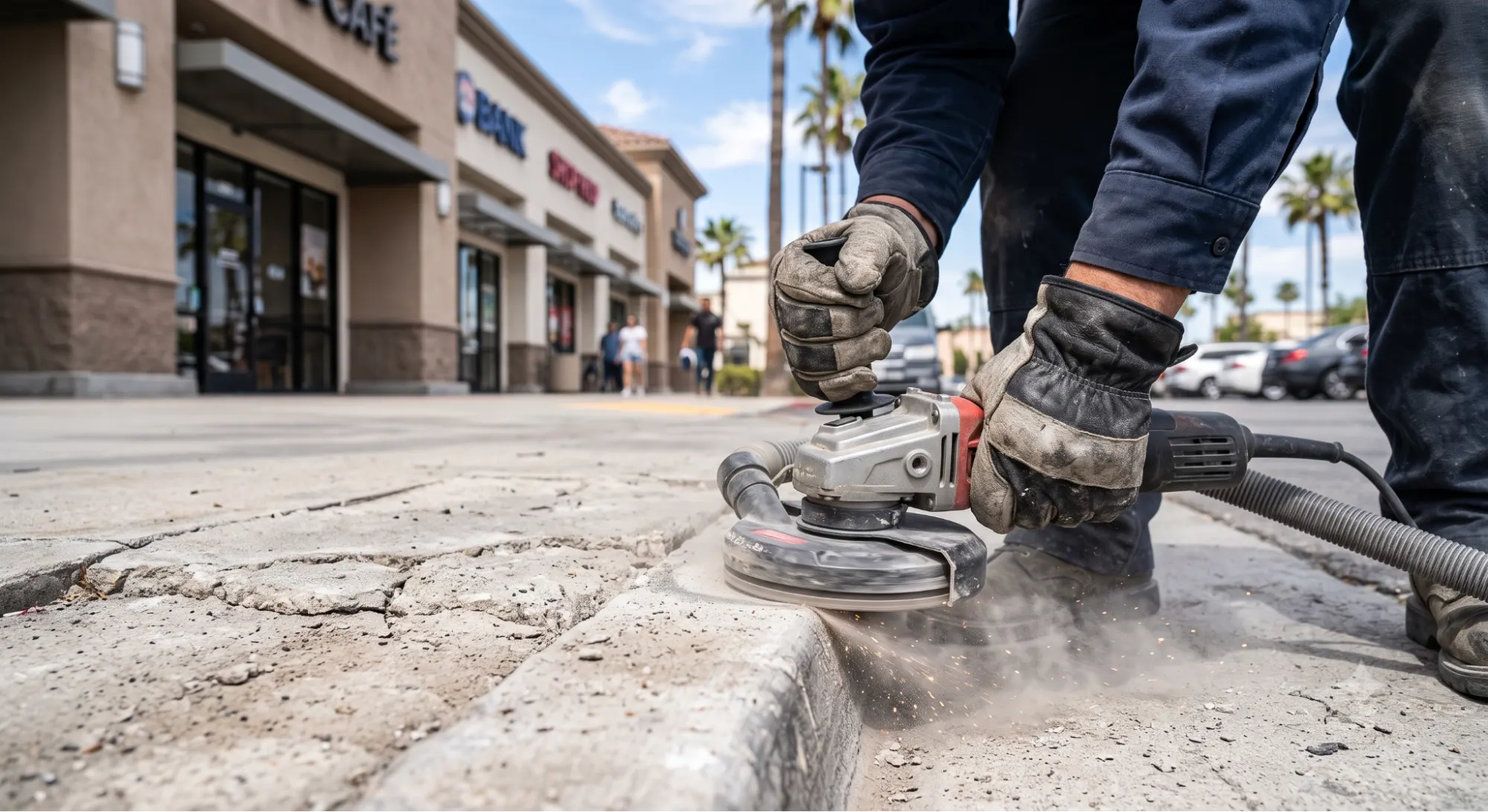
ADA Trip Hazard Removal: Protecting Your Property and Visitors
Introduction
Trip hazards are one of the most common yet preventable safety issues on commercial properties. A single raised sidewalk panel or cracked section of concrete can create a serious risk for visitors, tenants, and employees, and it can also put a property out of compliance with accessibility standards.
ADA trip hazard removal isn’t just about patching a crack here and there. It requires identifying the underlying cause of the hazard, correcting it properly, and making sure the surrounding surface meets current safety and accessibility standards.
High Standards Concrete helps property owners throughout Southern California identify and correct trip hazards before they lead to injuries, complaints, or costly claims.
What Counts as an ADA-Relevant Trip Hazard
Not every crack or bump in a walkway rises to the level of a compliance issue, but many common conditions do, including:
- Vertical displacement between adjacent concrete panels
- Cracks wide or deep enough to catch a foot or wheelchair caster
- Settling that creates uneven or sloped sections
- Deteriorated transitions between different surface materials
- Raised areas caused by tree roots or soil movement
Even hazards that seem minor can create real risk, particularly for visitors using wheelchairs, walkers, or canes.
Common Causes of Trip Hazards on Commercial Properties
Tree Root Intrusion
Roots growing beneath sidewalks and walkways are one of the leading causes of raised, cracked concrete, and they tend to worsen steadily over time if left unaddressed.
Soil Settlement
Uneven settling beneath a slab can cause one section of concrete to sink or rise relative to its neighbor, creating a sudden change in elevation.
Weather and Age-Related Wear
Years of exposure to sun, rain, and temperature swings can cause concrete to crack, flake, or shift, especially in older installations that weren’t built with modern reinforcement standards.
Poorly Executed Past Repairs
Patchwork repairs that don’t match the surrounding grade or use inconsistent materials often create new hazards instead of resolving old ones.
Property owners dealing with these issues may also want to review ADA Walkways and Pathways requirements, since trip hazards frequently appear where these two areas overlap.
Why Proper Concrete Repair Matters More Than a Quick Fix
Filling a crack or grinding down a lip might resolve the immediate hazard, but it doesn’t always address the underlying cause. If soil movement or root growth continues, the same hazard often reappears within a year or two.
A proper repair approach considers:
- The root cause of the displacement or cracking
- Long-term soil and drainage conditions
- Matching surface texture and slope to surrounding areas
- Reinforcement to prevent recurrence
- Compliance with current accessibility standards
Addressing the cause, not just the symptom, is what keeps a repaired area safe and compliant for years rather than months.
Trip Hazards Rarely Exist in Isolation
A single trip hazard is often a sign of a broader issue affecting the surrounding concrete. Parking areas, walkways, and ramps that connect to a damaged section may share the same underlying soil or drainage problems. Reviewing the full accessible route, rather than just the immediate hazard, gives a clearer picture of what needs attention. Our ADA compliance page covers how these elements work together across a property.
The Value of Addressing Trip Hazards Proactively
Improved Safety — Removing hazards before an incident occurs protects everyone who walks the property, from customers to employees.
Reduced Liability — Proactively correcting known hazards can significantly lower the risk of injury claims and legal disputes.
Better Property Reputation — A well-maintained, hazard-free property reflects positively on ownership and management.
Lower Long-Term Costs — Addressing a small hazard today is almost always cheaper than dealing with a lawsuit or a large-scale repair later.
When to Schedule a Trip Hazard Inspection
Consider scheduling an inspection if you notice:
- Visible cracks, gaps, or raised edges in concrete
- Reports or complaints from tenants or visitors
- Nearby trees with large root systems
- Recent settling or drainage issues
- Upcoming renovations or property transfers
Regular inspections help catch developing hazards before they become serious safety or compliance issues.
Find a Contractor Who Fixes the Cause, Not Just the Crack
Correcting trip hazards properly requires more than filling a gap. It takes an understanding of soil conditions, grading, and accessibility requirements to make sure the fix lasts. High Standards Concrete has spent years helping property owners resolve trip hazards the right way the first time. You can learn more about our approach on our About page.
Schedule an Assessment
If you’ve noticed cracked, raised, or uneven concrete anywhere on your property, don’t wait for an incident to address it. Contact us to schedule a trip hazard assessment, or visit our ADA compliance page to learn more about our full range of ADA-focused concrete services.
Introduction
Uneven concrete can start as a small problem and become a much bigger concern over time. Raised edges, cracked walkways, settling slabs, and deteriorating concrete can make it harder for people to move safely around a property.
For commercial properties in particular, maintaining a clear and accessible path of travel is an important part of keeping outdoor areas safe and usable.
ADA trip hazard removal focuses on identifying problem areas and determining the right way to correct them. Depending on the condition of the concrete, this may involve repairing or replacing affected sections to create a smoother and more consistent surface.
High Standards Concrete provides concrete solutions for commercial, residential, and ADA-compliant projects throughout Southern California.
What Can Create a Concrete Trip Hazard?
Concrete is durable, but it is not immune to movement and deterioration. Over time, several factors can cause surfaces to become uneven.
Common causes include:
- Soil movement or settlement beneath the concrete
- Tree roots pushing against slabs
- Cracking caused by age and repeated use
- Drainage issues around concrete surfaces
- Deterioration of older concrete
- Previous repairs that no longer provide an even transition
The cause matters because simply addressing what is visible may not always resolve the underlying issue.
Where Should Property Owners Look for Trip Hazards?
Trip hazards can develop anywhere people regularly walk through a property.
Areas worth checking include:
- Sidewalks and walkways
- Paths leading from parking areas to entrances
- Concrete surrounding ramps
- Building entrances
- Transitions between different paved surfaces
- High-traffic pedestrian areas
These areas form part of the route visitors, tenants, customers, and employees use every day. Regularly checking their condition can help property owners identify deterioration before it becomes more extensive.
If you’re dealing with damaged concrete around sidewalks or walkways, you can learn more about the types of concrete projects High Standards Concrete handles.
Signs Your Concrete May Need Attention
Some concrete problems are easy to spot, while others develop gradually.
Watch for:
- Raised edges between adjoining concrete slabs
- Sections that have started to sink or settle
- Large or worsening cracks
- Broken or deteriorating concrete
- Uneven transitions between surfaces
- Areas where water regularly collects
- Concrete movement near large trees or landscaping
Even when a problem appears minor, it is worth understanding why the surface has changed before deciding on the appropriate repair.
Why the Cause of the Problem Matters
Not every uneven concrete surface develops for the same reason.
For example, a raised slab caused by tree roots presents a different problem from concrete that has settled because of soil movement. Likewise, cracking associated with drainage problems may require a different approach from ordinary surface deterioration.
Before completing a repair, the surrounding conditions should be considered so that the work addresses the actual problem rather than only improving its appearance.
This can also help determine whether an isolated repair is appropriate or whether a larger section of concrete requires attention.
Repair or Replacement?
The condition of the concrete will influence the best approach.
Some localized problems may be suitable for repair. In other cases, significant cracking, deterioration, movement, or uneven grading may make replacement the more appropriate option.
A professional concrete contractor can evaluate factors such as:
- The extent of the damage
- The condition of surrounding concrete
- Existing slopes and transitions
- Drainage around the affected area
- The intended use of the surface
- How the repaired area connects to nearby walkways, ramps, or entrances
The goal should be to create a stable, durable surface that works properly with the surrounding property.
Think Beyond a Single Raised Slab
One uneven section of concrete may not be the only area requiring attention.
If settlement, drainage, tree roots, or age have affected one section of a walkway, nearby concrete may show similar signs of movement or deterioration.
For this reason, it can be helpful to look at the surrounding pedestrian route rather than focusing only on the most obvious problem.
This provides a clearer picture of the property’s concrete condition and can help identify areas that may require maintenance or repair.
The Benefits of Addressing Concrete Hazards Early
Taking care of uneven or deteriorating concrete early can provide several benefits.
Safer Surfaces
Smoother, well-maintained concrete helps create safer walking areas for people using the property.
Better Accessibility
Maintaining even transitions and usable pathways supports a more accessible environment.
Improved Appearance
Damaged and uneven concrete can make an otherwise well-maintained property look neglected. Professional concrete work creates a cleaner and more consistent finish.
More Manageable Repairs
Addressing deterioration before it spreads may help prevent a smaller concrete issue from becoming a more extensive repair project.
Choosing an Experienced Concrete Contractor
ADA-related concrete work requires careful attention to the condition, grading, transitions, and surrounding path of travel.
Learn more about High Standards Concrete and its work on commercial, residential, and ADA-compliant projects, including new construction, repairs, restorations, and custom concrete solutions.
When dealing with uneven or deteriorating concrete, the first step is understanding the condition of the existing surface and what is causing the problem.
Contact High Standards Concrete
If you have cracked, raised, settling, or uneven concrete on your property, High Standards Concrete can help you discuss the appropriate next step.
Contact High Standards Concrete to discuss your project and learn more about available concrete solutions.
Raise your standards and create an environment that captivates those who are within it!
Raise your standards and create an environment that captivates those who are within it!
Need something to create curb appeal and great design aspects? We know what to consider when it comes to color schemes, line of sight, creating mystery and appeal, and blending these important aspects with functionality. Need something to create curb appeal and great design aspects? We know what to consider when it comes to color schemes, line of sight, creating mystery and appeal, and blending these important aspects with functionality. Need something to create curb appeal and great design aspects? We know what to consider when it comes to color schemes, line of sight, creating mystery and appeal, and blending these important aspects with functionality.