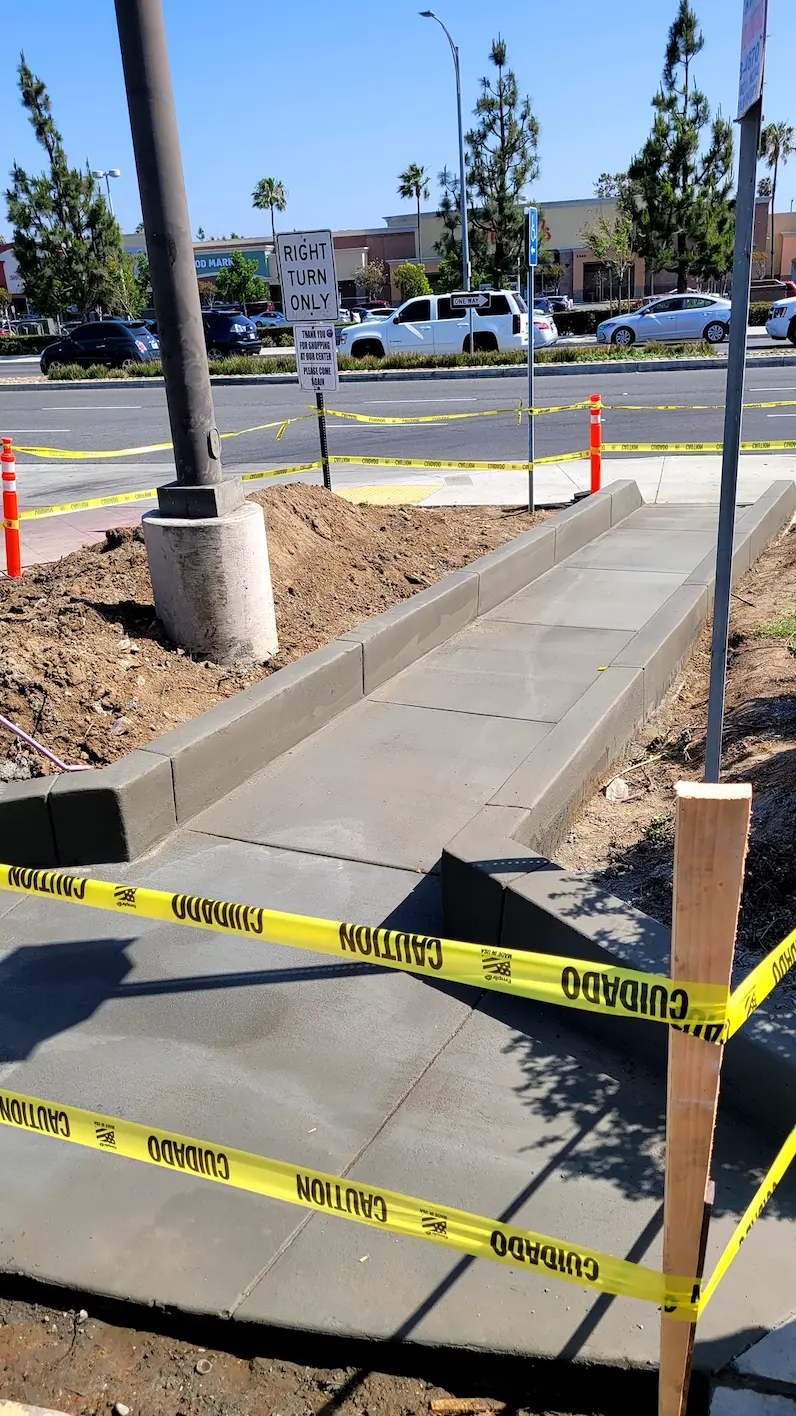
ADA Ramps: Best Practices for Accessibility
An ADA ramp contractor builds the concrete ramp, landings, and side conditions a property needs for an accessible route.
Introduction
Ramps are one of the most critical components of ADA compliance. They provide essential access for individuals with mobility challenges and must meet strict guidelines to ensure safety.
Improperly built ramps are one of the most common ADA violations—and one of the most dangerous.
High Standards Concrete installs and upgrades ADA-compliant ramps across Hesperia, helping property owners stay compliant while improving accessibility.
ADA Ramps in Commercial Properties
For commercial properties, ADA ramps are not just a design feature—they are a legal requirement and a critical part of public access infrastructure.
Businesses such as retail centers, office buildings, medical facilities, warehouses, and restaurants must ensure that all entry points are accessible to individuals with disabilities.
This means ramps must be properly designed from the start, not added as an afterthought.
In commercial environments, ADA ramp construction typically needs to account for:
- Higher foot traffic volumes
- Delivery and service access points
- Connection between parking lots and building entrances
- Integration with sidewalks and walkways
- Long-term durability under constant use
Poorly designed ramps in commercial spaces often lead to compliance violations during inspections, especially when slope ratios or landing areas are not correctly executed.
For full-site compliance considerations, property owners should also review ADA walkways and pathway requirements alongside ramp construction.
ADA Ramp Requirements
ADA guidelines specify how ramps must be designed and constructed.
Key requirements include:
- Maximum slope ratio (typically 1:12)
- Stable, slip-resistant surface
- Proper width for accessibility
- Level landings at the top and bottom
- Smooth transitions between surfaces
Failure to meet these standards can result in non-compliance.
For a full breakdown, property owners should review the ADA compliance page.
Common Ramp Issues
Many ramps fail ADA standards due to:
- Slopes that are too steep
- Uneven or cracked surfaces
- Lack of proper landings
- Poor drainage
- Worn or slippery finishes
These issues not only affect compliance but also create serious safety risks.
Concrete as the Ideal Material for ADA Ramps
Concrete is widely used for ADA ramps because it offers:
- Strength and durability
- Smooth, stable surfaces
- Long-term performance
- Low maintenance
When installed correctly, concrete ramps provide safe access for years.
Designing Ramps for Compliance
Professional contractors focus on:
- Accurate slope calculations
- Proper grading and base preparation
- Reinforcement for structural integrity
- Slip-resistant finishes
- Seamless transitions to adjacent surfaces
Ramps should also integrate with surrounding walkways to ensure full accessibility.
ADA Ramps as Part of Broader Commercial Site Compliance
ADA ramps rarely exist in isolation. In most commercial properties, they are part of a wider accessibility system that includes parking lots, walkways, entrances, and internal circulation routes.
This means a properly built ramp must align with the entire site layout—not just meet isolated measurements.
Common commercial compliance issues linked to ramps include:
- Parking spaces that do not properly connect to ramp access points
- Walkways that are too steep or uneven leading to entrances
- Poor drainage around ramp transitions causing surface damage
- Inconsistent elevations between building entries and exterior slabs
When these elements are not coordinated, even a correctly built ramp can fail to meet full ADA compliance expectations.
That’s why commercial ADA projects require detailed planning and coordination across all concrete surfaces, not just the ramp itself.
High Standards Concrete works with property owners to ensure ramps, walkways, and surrounding infrastructure function together as a compliant, accessible system.
Why ADA-Compliant Ramps Matter
Accessibility
Ensures equal access for all individuals.
Safety
Reduces the risk of slips, falls, and injuries.
Legal Compliance
Helps avoid fines, lawsuits, and required corrections.
When to Upgrade or Replace a Ramp
You may need to upgrade your ramp if you notice:
- Steep incline
- Surface damage or cracking
- Uneven transitions
- Signs of wear or instability
Work with Experienced ADA Contractors
ADA ramp installation requires precision and experience.
High Standards Concrete provides:
- Ramp inspections and compliance checks
- New ramp construction
- Repairs and upgrades
Schedule an ADA Ramp Assessment
Commercial property owners often combine ramp upgrades with ADA-compliant walkways and parking lot adjustments to ensure full-site compliance.
If your property has an outdated or non-compliant ramp, now is the time to address it.
Visit High Standards Concrete’s ADA compliance page or contact us to schedule an inspection.
Raise your standards and create an environment that captivates those who are within it!
Raise your standards and create an environment that captivates those who are within it!
Need something to create curb appeal and great design aspects? We know what to consider when it comes to color schemes, line of sight, creating mystery and appeal, and blending these important aspects with functionality. Need something to create curb appeal and great design aspects? We know what to consider when it comes to color schemes, line of sight, creating mystery and appeal, and blending these important aspects with functionality. Need something to create curb appeal and great design aspects? We know what to consider when it comes to color schemes, line of sight, creating mystery and appeal, and blending these important aspects with functionality.