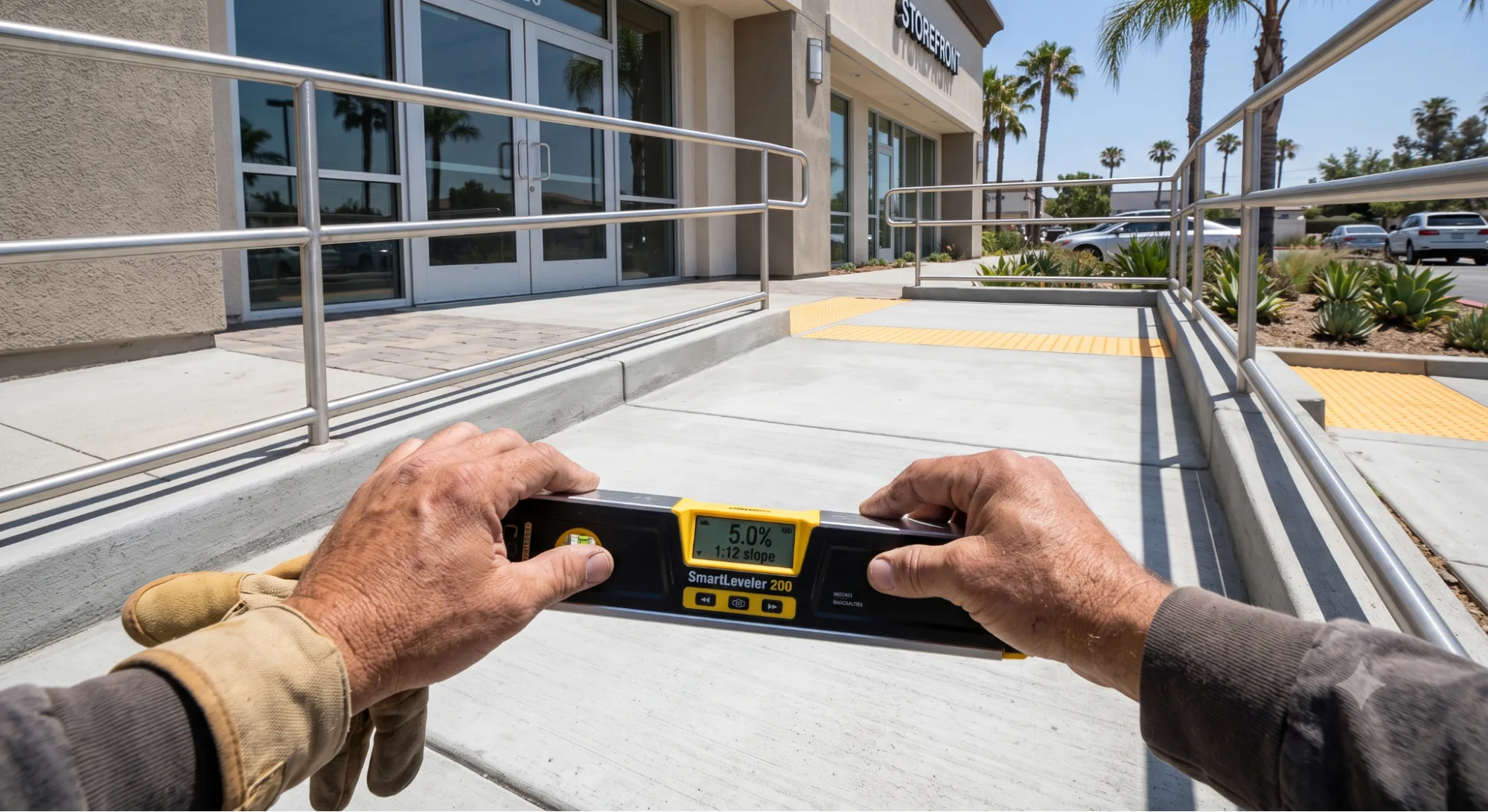
ADA Ramp Compliance: A Guide for California Property Owners
Introduction
Ramps are one of the most visible accessibility features on any commercial property, yet they’re also one of the most frequently overlooked when it comes to compliance. A ramp that looks fine at a glance can still fail to meet ADA standards if the slope, landing, handrails, or surface don’t align with current requirements.
ADA ramp compliance isn’t just about connecting two different elevations. It’s about creating a safe, predictable, and usable path for every visitor, regardless of ability. For property owners, understanding these requirements is the first step toward avoiding costly corrections down the road.
High Standards Concrete works with commercial properties, HOAs, and property managers throughout Southern California to design and install ramps that meet ADA standards while holding up to years of daily use.
What Makes a Ramp ADA Compliant
The Americans with Disabilities Act sets detailed standards for ramp construction, and small deviations can make a ramp non-compliant even if it appears functional.
Key requirements typically include:
- Maximum running slope and cross slope limits
- Minimum ramp width for safe passage
- Level landings at the top, bottom, and any direction changes
- Handrails that meet height, grip, and extension requirements
- Edge protection to prevent wheelchair casters from slipping off
- Slip-resistant, stable surface materials
Each of these elements works together. A ramp can meet the slope requirement and still be non-compliant if the landing is too small or the surface has deteriorated.
Common Ramp Violations Property Owners Overlook
Slope That Exceeds the Limit The most frequent ramp violation involves a running slope or cross slope that’s steeper than allowed. This often happens gradually, as soil settlement or previous patchwork repairs shift the original grade over time.
Missing or Undersized Landings Ramps that connect directly to a door, a sidewalk, or a parking area often lack a properly sized level landing, which can create a dangerous transition point for wheelchair users.
Deteriorated Surfaces Cracking, spalling, and uneven concrete can turn an otherwise compliant ramp into a hazard. Even minor surface damage can affect traction and stability.
Handrail Deficiencies Handrails that are too high, too low, poorly anchored, or missing proper extensions are a common source of non-compliance, particularly on older ramps that haven’t been updated to current standards.
Property owners dealing with surface-level hazards may also want to review our ADA compliance page for a broader look at how these issues connect across a property.
Why Concrete Quality Matters for Ramps
A ramp is only as reliable as the concrete beneath it. Poor mix design, inadequate reinforcement, or improper curing can lead to early cracking, settlement, and slope changes that push a ramp out of compliance within just a few years.
Properly installed concrete supports:
- Long-term slope stability
- Consistent, slip-resistant surface texture
- Structural durability under repeated use
- Reduced need for frequent patch repairs
- A smoother, safer path of travel
When concrete is installed correctly from the start, ramps are far more likely to remain compliant year after year, rather than requiring repeated corrections.
Ramps Are Part of a Larger Accessible Path
A compliant ramp rarely stands alone. It’s typically one link in a longer accessible route that includes parking areas, walkways, and building entrances. If any one piece of that path fails to meet standards, the entire route can be considered non-compliant.
This is why ramp evaluations often uncover related issues elsewhere on the property, and why a comprehensive review is usually more effective than addressing a single ramp in isolation.
The Benefits of Staying Ahead of Ramp Compliance
Improved Safety — A properly maintained ramp reduces the risk of falls and injuries for visitors, tenants, and employees alike.
Reduced Liability — Addressing ramp issues proactively can help property owners avoid complaints, disputes, or legal exposure.
Better First Impressions — An accessible, well-maintained entrance sets a positive tone for anyone visiting the property.
Lower Long-Term Costs — Correcting a ramp early is almost always less expensive than dealing with major reconstruction or an emergency repair later.
When Should a Ramp Be Reviewed?
Consider scheduling a ramp evaluation if you’re:
- Renovating or upgrading a commercial property
- Replacing existing concrete
- Responding to an accessibility complaint
- Purchasing a new property
- Noticing visible cracking, settling, or slope changes
An early assessment can catch problems while they’re still minor and inexpensive to fix.
Work with a Contractor Who Understands ADA Ramp Standards
Ramp construction requires precision. Slope tolerances are tight, and small errors during installation can lead to compliance issues that are expensive to correct later. High Standards Concrete has spent years helping property owners across the region get ramps right the first time. You can learn more about our team and approach on our About page.
Schedule an Assessment
If you’re unsure whether your property’s ramps meet current ADA standards, now is the time to find out. Contact us to schedule a ramp evaluation, or visit our ADA compliance page to learn more about our full range of ADA-focused concrete services.
Raise your standards and create an environment that captivates those who are within it!
Raise your standards and create an environment that captivates those who are within it!
Need something to create curb appeal and great design aspects? We know what to consider when it comes to color schemes, line of sight, creating mystery and appeal, and blending these important aspects with functionality. Need something to create curb appeal and great design aspects? We know what to consider when it comes to color schemes, line of sight, creating mystery and appeal, and blending these important aspects with functionality. Need something to create curb appeal and great design aspects? We know what to consider when it comes to color schemes, line of sight, creating mystery and appeal, and blending these important aspects with functionality.