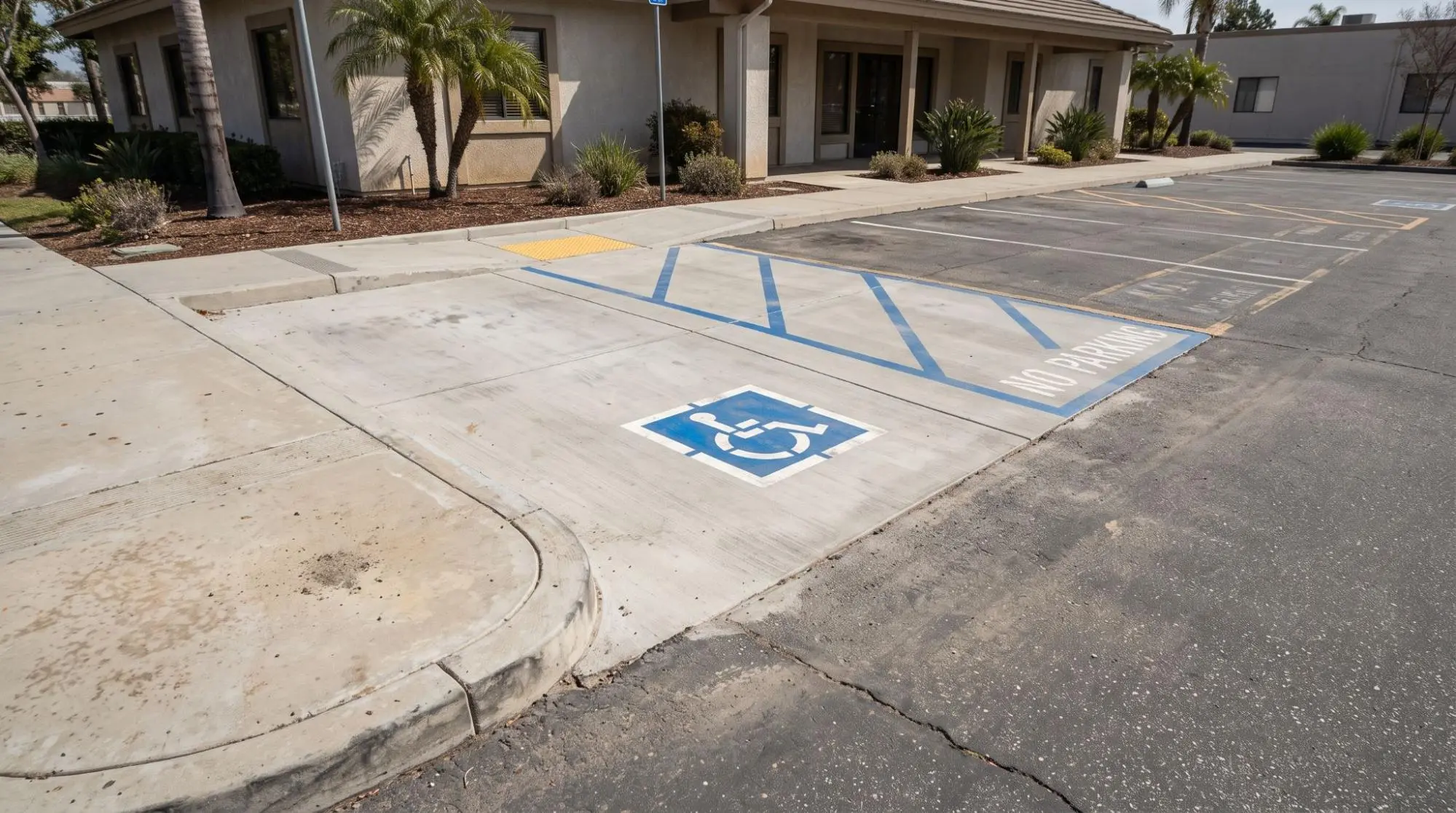
ADA Parking Lot Resurfacing vs. Reconstruction: When Is Each Necessary?
Introduction
Every parking lot eventually wears out. Sun, traffic, and soil movement leave property owners facing the same decision: resurface the existing lot, or tear it out and rebuild. That choice affects more than the budget — it determines whether the lot’s accessibility problems actually get fixed.
A fresh surface can make a lot look new while leaving steep accessible spaces, poor drainage, and broken connections exactly where they were. And because resurfacing and restriping projects can be treated as alterations under accessibility rules, work that seems like routine maintenance can bring ADA requirements into play.
High Standards Concrete provides commercial and ADA-focused concrete solutions throughout Southern California, helping property owners address damaged surfaces, uneven transitions, and accessibility-related concrete issues.
Resurfacing vs. Reconstruction: What’s the Difference?
The right approach depends on what’s actually wrong with the lot, and that starts with understanding the options.
Resurfacing
Resurfacing applies a new wearing layer over the existing pavement. It refreshes the look and seals minor cracks, but it keeps the lot’s existing base, grades, and slopes.
Partial Reconstruction
Partial reconstruction removes and rebuilds specific areas, such as accessible spaces, access aisles, or curb ramps, while the rest of the lot is repaired or resurfaced.
Full Reconstruction
Full reconstruction removes the existing pavement and often the base beneath it, allowing the lot to be regraded, redesigned, and rebuilt from the ground up.
When Resurfacing Makes Sense
Resurfacing can be a cost-effective choice when the lot’s structure and layout are still sound.
It’s typically a good fit when:
- The base is stable with no widespread settlement
- Damage is limited to surface wear, fading, or minor cracking
- Accessible spaces and aisles already meet slope requirements
- Drainage works properly across the lot
- The accessible route connects to walkways without abrupt level changes
Because resurfacing preserves existing grades, it works well when those grades are right, and locks in the problem when they aren’t.
When Reconstruction Is Necessary
Some problems can’t be solved by adding a new layer on top. Reconstruction is usually the better option when:
- Accessible spaces or access aisles are too steep
- Cracking, potholes, or base failure are widespread
- Water regularly pools in spaces, aisles, or along the accessible route
- Settlement has created level changes between the lot and adjacent walkways
- The layout needs to change, such as adding van-accessible spaces or moving accessible parking closer to the entrance
Resurfacing over these issues often means paying twice: once for the new surface, and again when it has to be removed to correct the problem underneath.
Why Resurfacing Isn’t Always “Just Maintenance”
Many property owners are surprised to learn that resurfacing or restriping a parking lot can trigger accessibility requirements. These projects are often treated as alterations, which generally means the accessible parking in the affected area needs to meet current standards.
- That can include a review of:
- The number and location of accessible spaces
- Van-accessible spaces and access aisle dimensions
- Slopes within spaces and aisles
- Signage and pavement markings
- The connection between parking and the accessible route
In California, alteration projects can also trigger upgrades to the surrounding path of travel. Because requirements depend on the scope of each project, property owners should confirm their obligations with the local building department before work begins. For a full overview of what compliant parking involves, see our guide to ADA parking lot compliance.
The Targeted Approach: Rebuilding Accessible Areas in Concrete
Depending on the condition of the parking lot, targeted concrete reconstruction may be an option for accessible parking spaces, access aisles, and curb ramps. The appropriate approach depends on existing pavement conditions, grading, drainage, and applicable accessibility requirements.
This approach supports:
- Precise grading in the areas with the strictest slope requirements
- A durable surface that holds its shape in summer heat
- Clean, flush transitions to curb ramps and walkways
- Long-lasting surfaces for striping and markings
- Lower costs than rebuilding the entire lot
Where settled or lifted concrete has created raised edges along walkways, ADA trip hazard removal can be completed as part of the same project.
Parking Is Part of the Accessible Route
Whichever approach you choose, the parking lot has to connect to curb ramps, walkways, and the building entrance as one continuous route. Planning parking work with the full route in mind avoids fixing one area while leaving a barrier in the next. Our ADA compliance page explains how these elements work together across a property.
The Benefits of Choosing the Right Approach
Long-Term Accessibility — Addressing slopes, layout, and surface conditions can help maintain accessible parking areas and reduce the risk of future compliance issues.
Reduced Liability — Addressing accessibility issues during planned work lowers the risk of complaints and required corrections later.
Smarter Spending — Putting the budget where it matters avoids paying for a new surface that will soon need to be torn out.
Fewer Disruptions — Doing the work right once means fewer lot closures for tenants, customers, and staff.
When to Schedule a Parking Lot Evaluation
Consider scheduling an evaluation if you’re:
- Planning to resurface, sealcoat, or restripe the lot
- Budgeting for capital improvements
- Seeing widespread cracking, potholes, or settling
- Dealing with standing water after rain
- Responding to an accessibility complaint
- Purchasing a property or preparing it for sale
An evaluation before resurfacing is the best way to know whether a new surface will solve the problem or hide it.
Work with a Contractor Who Looks Below the Surface
Choosing between resurfacing and reconstruction takes a clear understanding of grading, drainage, base conditions, and accessibility requirements. High Standards Concrete has spent years helping property owners across the region make that call and build parking areas that are durable and compliant. You can learn more about our team and approach on our About page.
Schedule an Assessment
If your parking lot is due for work, find out what it really needs before you commit to a plan. Contact us to schedule a parking lot assessment, or visit our ADA compliance page to learn more about our full range of ADA-focused concrete services.
Raise your standards and create an environment that captivates those who are within it!
Raise your standards and create an environment that captivates those who are within it!
Need something to create curb appeal and great design aspects? We know what to consider when it comes to color schemes, line of sight, creating mystery and appeal, and blending these important aspects with functionality. Need something to create curb appeal and great design aspects? We know what to consider when it comes to color schemes, line of sight, creating mystery and appeal, and blending these important aspects with functionality. Need something to create curb appeal and great design aspects? We know what to consider when it comes to color schemes, line of sight, creating mystery and appeal, and blending these important aspects with functionality.