ADA Walkway and Pathway Compliance for Commercial Properties
Introduction
Walkways and pathways connect nearly every part of a commercial property, from the parking lot to the front door and everywhere in between. Because they’re used so often, small accessibility issues in a walkway can have an outsized impact on how safe and usable a property really is.
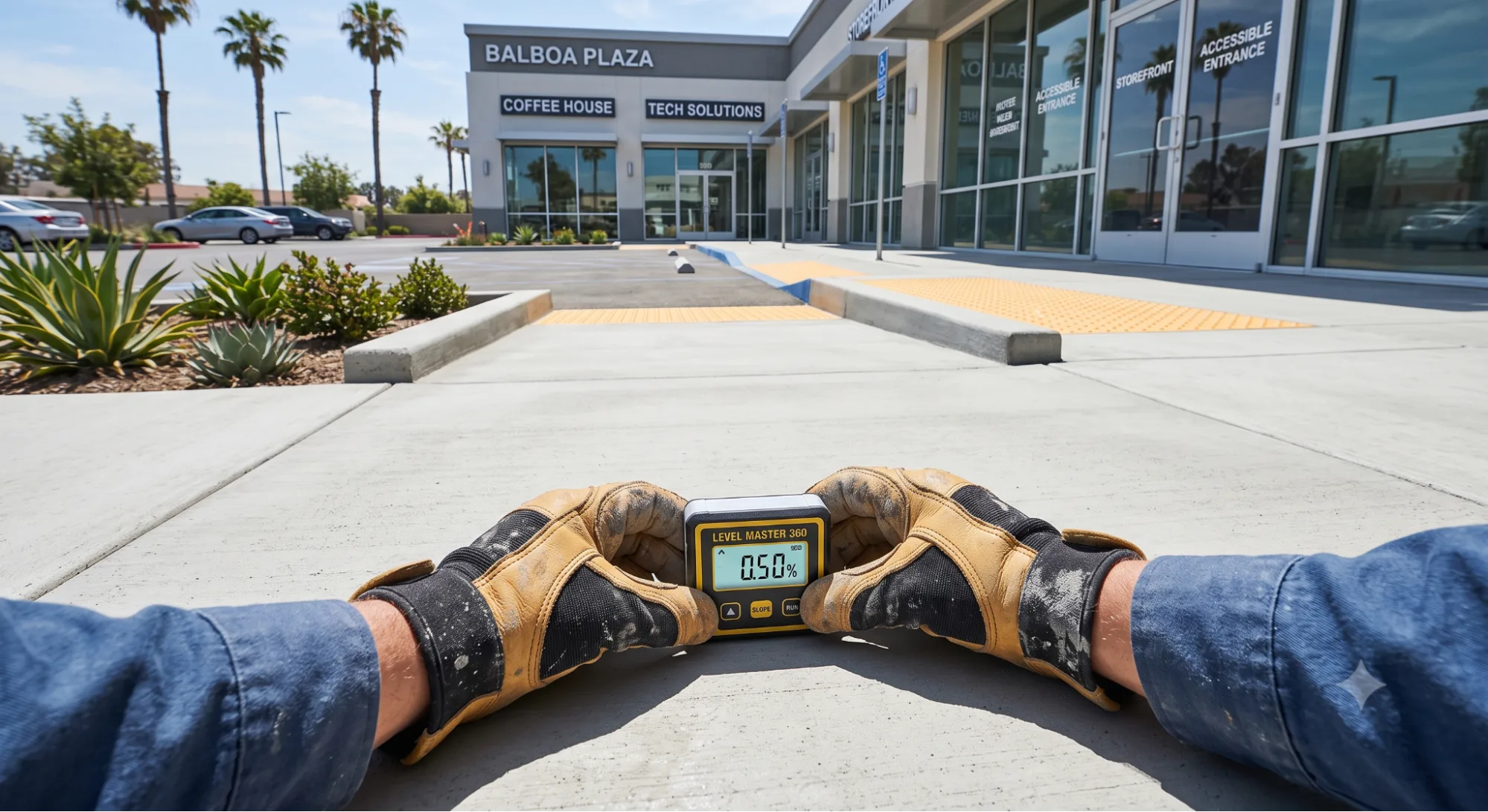
ADA walkway compliance goes beyond having a paved surface. It involves width, slope, surface condition, and continuity, all of which need to work together to form a reliable path of travel for visitors of every ability.
High Standards Concrete helps property owners across Southern California build and repair walkways that meet ADA standards and hold up under everyday foot traffic.
What ADA Walkway Compliance Actually Involves
Accessible walkways are governed by specific standards designed to make sure every part of the path can be used safely and independently.
These standards generally address:
- Minimum walkway width for wheelchair passage
- Maximum running and cross slope
- Even, stable, slip-resistant surfaces
- Continuous accessible routes without abrupt level changes
- Proper transitions at driveways, curb cuts, and entrances
A walkway that satisfies most of these requirements but fails even one can still create a barrier for someone relying on it.
Where Walkway Compliance Commonly Breaks Down
Uneven or Shifting Surfaces Tree roots, soil movement, and age can cause sections of concrete to rise, sink, or crack, creating uneven surfaces that are difficult or unsafe to navigate.
Slopes That Drift Out of Range Walkways that were compliant when installed can gradually develop excessive slope as the ground beneath them settles, especially in areas with drainage issues.
Narrow or Obstructed Paths Landscaping, signage, or poorly placed fixtures can narrow a walkway below the required clearance, turning a compliant path into a non-compliant one.
Abrupt Transitions Sudden height changes where a walkway meets a driveway, parking area, or entrance can create trip hazards and accessibility barriers. Property owners facing these transition issues often benefit from reviewing ADA Trip Hazard Removal solutions alongside their walkway plans.
The Role Concrete Plays in a Safe Pathway System
Concrete is the backbone of most walkway systems, and its quality directly affects how long a pathway stays safe and compliant.
Well-installed concrete supports:
- Stable, even walking surfaces
- Consistent grading across long distances
- Resistance to cracking and heaving over time
- Lower long-term maintenance needs
- Fewer disruptive repairs
When concrete work is done correctly, it reduces the likelihood that a walkway will develop the kind of surface problems that lead to accessibility complaints.
Walkways Don’t Exist in Isolation
A single walkway is rarely the whole picture. It typically connects parking areas, ramps, and entrances into one continuous accessible route. If any segment of that route is out of compliance, visitors relying on it may be unable to complete their journey safely.
This is why a full-property review often makes more sense than spot-checking individual sections. Property owners planning improvements should also look at ADA Ramp standards and our broader ADA compliance page to understand how these pieces fit together.
Why Addressing Walkway Issues Early Pays Off
Improved Safety — Even well-maintained walkways lower the risk of slips, trips, and falls for everyone who uses them.
Reduced Liability — Fixing walkway problems before they’re flagged helps property owners avoid complaints and potential legal exposure.
Stronger Curb Appeal — Clean, level, well-maintained pathways make a strong first impression on tenants, customers, and visitors.
Lower Repair Costs — Small cracks and minor settling are far cheaper to correct than a full walkway replacement after years of deterioration.
Signs It’s Time to Evaluate Your Walkways
An assessment is worth scheduling when you notice:
- Visible cracking, heaving, or settling in concrete
- Complaints from tenants or visitors about uneven surfaces
- Plans for property renovation or resurfacing
- A recent change in property ownership
- Standing water or drainage issues near pathways
Catching these signs early often means the difference between a simple repair and a major reconstruction project.
Partnering with an Experienced ADA Concrete Contractor
Walkway compliance requires careful attention to grading, materials, and long-term durability, not just a fresh layer of concrete. High Standards Concrete has helped businesses and property managers throughout the region design walkways that meet ADA standards and stand the test of time. Learn more about our experience on our About page.
Schedule an Assessment
If your walkways show signs of wear, uneven grading, or accessibility concerns, it’s worth having them reviewed sooner rather than later. Contact us to schedule a walkway assessment, or visit our ADA compliance page to explore our full range of ADA-focused concrete services.
Raise your standards and create an environment that captivates those who are within it!
Raise your standards and create an environment that captivates those who are within it!
Need something to create curb appeal and great design aspects? We know what to consider when it comes to color schemes, line of sight, creating mystery and appeal, and blending these important aspects with functionality. Need something to create curb appeal and great design aspects? We know what to consider when it comes to color schemes, line of sight, creating mystery and appeal, and blending these important aspects with functionality. Need something to create curb appeal and great design aspects? We know what to consider when it comes to color schemes, line of sight, creating mystery and appeal, and blending these important aspects with functionality.